
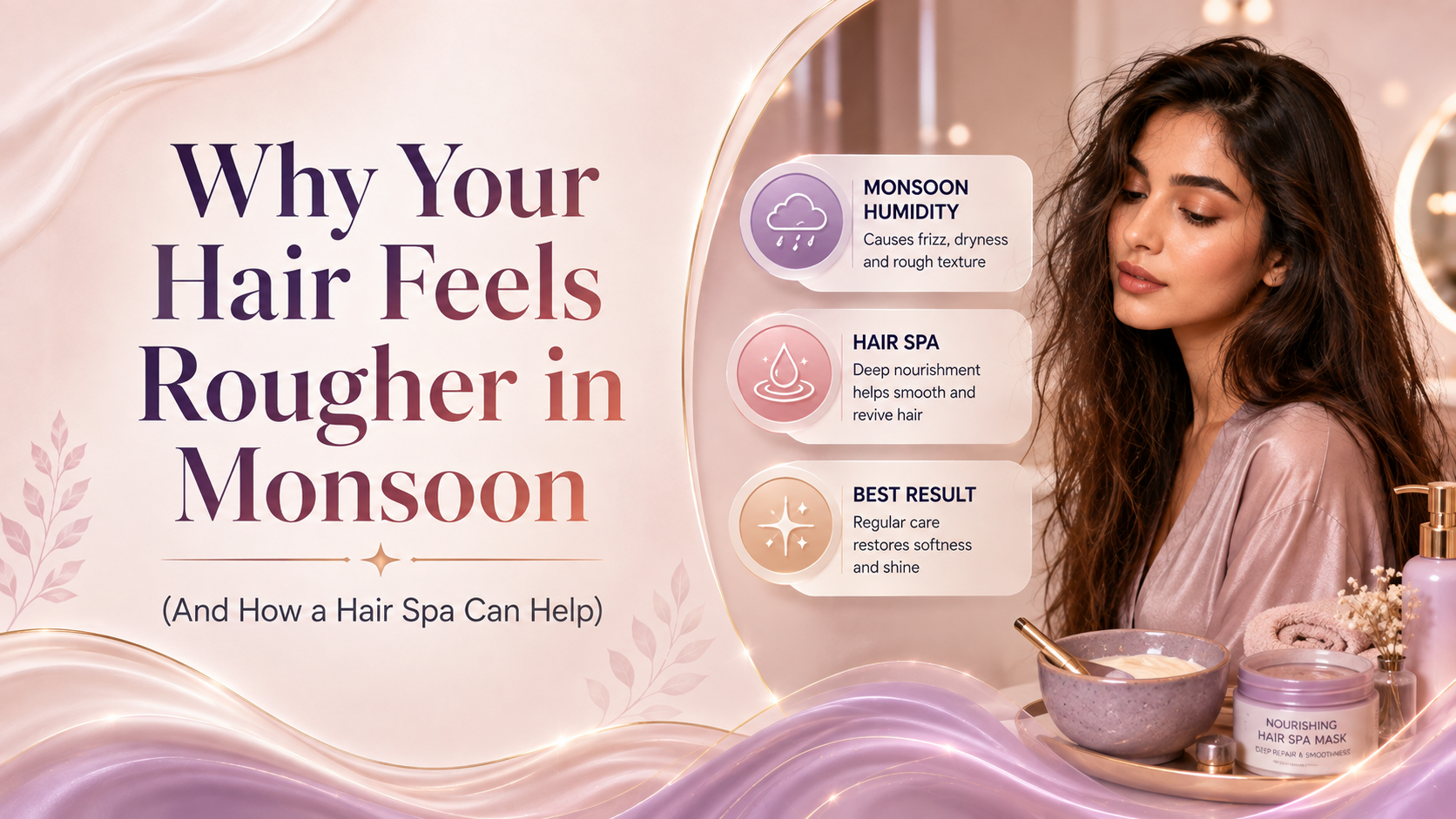
Monsoon brings cooler weather and welcome relief from the heat, but your hair may react very differently. If your strands suddenly feel rough, frizzy, dull, tangled, or difficult to style when humidity rises, you are not imagining it.
Rainy weather changes the moisture balance of your hair. High humidity, rain exposure, scalp sweat, product buildup, and frequent washing can all affect the hair cuticle. The result is a familiar monsoon problem: an oily scalp with dry, rough lengths.
Fortunately, monsoon hair does not need an overly complicated routine. The right cleansing, hydration, and professional care can improve softness and manageability. A customised hair spa at NSalon can be a useful part of that routine.
Why Does Hair Feel Rougher During Monsoon?
Humidity is one of the biggest reasons. Hair is porous, which means it absorbs moisture from the surrounding air. In humid weather, excess moisture can affect the hair shaft and make the outer cuticle feel less smooth.
When the cuticle is raised, strands feel coarse, catch against one another, and become more prone to frizz and tangling. This is often more noticeable in dry, curly, coloured, chemically treated, or heat-damaged hair.
Rainwater Can Leave Hair Dull
Rainwater can pick up dust and pollutants before it reaches your hair, leaving residue that makes strands feel dull or rough. After getting caught in the rain, rinse with clean water when possible, dry the scalp properly, and avoid tying up soaking-wet hair.
Frequent Shampooing Can Dry the Lengths
Monsoon humidity often makes the scalp feel sweaty or greasy, so you may shampoo more often. While cleansing is important, frequent use of a harsh shampoo can strip natural oils from the lengths and ends.
This can create an imbalance where the roots become oily quickly but the rest of the hair feels dry.
Scalp Buildup Can Make Hair Harder to Manage
Sweat, sebum, styling products, and inadequate drying can create buildup, leaving roots flat while lengths remain frizzy. A balanced routine should combine gentle scalp cleansing with targeted conditioning for the mid-lengths and ends.
How Can a Hair Spa Help During Monsoon?
A professional hair spa combines cleansing, conditioning, massage, and targeted hair care in one treatment. Depending on your hair type, it may include a nourishing mask, controlled steam or heat, scalp massage, and a finishing treatment.
The key benefit is personalisation. A salon professional can choose the treatment according to your scalp condition, texture, dryness, and level of damage.
1. Restores Moisture to Rough Lengths
Rough monsoon hair often needs hydration rather than more oil. A suitable hair spa can replenish moisture through the mid-lengths and ends, where dryness is usually most noticeable.
This helps improve softness without unnecessarily making an already humid-weather scalp feel heavy or greasy.
2. Helps Smooth the Hair Cuticle
Conditioning treatments used during a hair spa can improve the surface feel of the hair. Smoother strands create less friction, reflect light better, and are easier to detangle.
That means less pulling during combing and a more polished appearance after styling.
3. Supports Better Scalp Cleansing
A hair spa can begin with proper cleansing to remove excess oil, sweat, and styling residue. This is particularly useful when the scalp feels sticky or congested during monsoon.
However, persistent itching, severe flaking, sores, or sudden hair loss should be evaluated by a dermatologist rather than managed only with salon treatments.
4. Makes Frizz Easier to Control
No treatment can eliminate humidity, but well-conditioned hair usually responds to it more predictably. By improving softness and reducing surface roughness, a hair spa can make frizz easier to manage.
Better-conditioned hair may also reduce the temptation to repeatedly straighten or heat-style rough sections.
5. Improves Everyday Manageability
One of the most noticeable hair spa benefits is easier styling. Softer, less tangled hair is simpler to comb, blow-dry, and maintain at home.
Who Should Consider a Hair Spa in Monsoon?
A hair spa may be helpful if your hair becomes unusually dry, frizzy, dull, tangled, or difficult to style during the rainy season. The treatment should match your hair type. Fine hair may need lightweight conditioning, while thick, coarse, curly, or damaged hair may benefit from richer nourishment. Oily scalps may require stronger attention to cleansing without overloading the roots.
How Often Should You Get a Hair Spa?
There is no universal schedule. For many people, a hair spa every two to four weeks can work well during monsoon. Very dry or damaged hair may need more structured professional maintenance, while healthy or fine hair may need treatments less frequently.
Your ideal frequency depends on your scalp type, texture, chemical history, and styling habits.
Monsoon Hair Care Tips to Maintain the Results
A salon treatment works best when your home routine supports it:
- Rinse your hair after getting wet in the rain.
- Avoid sleeping or tying your hair while it is damp.
- Use a gentle shampoo suited to your scalp type.
- Apply conditioner mainly to the mid-lengths and ends.
- Detangle gently with a wide-tooth comb.
- Limit unnecessary heat styling.
- Use a lightweight anti-frizz serum when required.
- Keep towels, combs, brushes, and pillowcases clean.
Remember, an oily scalp does not automatically mean your hair lengths are well moisturised. Monsoon hair usually needs balance rather than aggressive cleansing or heavy product layering.
Give Your Hair a Monsoon Reset at NSalon
Rough hair during monsoon is often the result of humidity, raised cuticles, rain exposure, frequent washing, and an unbalanced routine. Instead of fighting the season with more shampoo, heavy oiling, or repeated heat styling, focus on scalp cleanliness and moisture where your hair needs it most.
A customised hair spa at NSalon can help cleanse buildup, replenish moisture, smooth rough strands, and improve overall manageability. Combined with consistent home care, it can make rainy-season hair easier to handle.
If your hair feels rougher, duller, or more tangled this monsoon, consider booking a hair consultation and hair spa at NSalon to identify a treatment suited to your hair type and concerns.
Frequently Asked Questions
1. Is a hair spa good for frizzy hair in monsoon?
Yes. A suitable hair spa can improve hydration and smoothness, which may make frizz easier to control. Results depend on your hair type and the treatment used.
2. Can I get a hair spa if my scalp is oily?
Yes. The treatment can be customised with scalp cleansing and lighter products near the roots while still hydrating dry lengths.
3. How long do hair spa results last?
Results may last from several days to a few weeks depending on your hair condition, washing frequency, humidity, styling habits, and home-care routine.
4. Does a hair spa reduce hair fall?
A hair spa may help reduce breakage caused by dryness and tangling, but it is not a medical treatment for hair loss. Persistent or sudden hair fall should be evaluated by a dermatologist.
5. What is the best treatment for rough hair in monsoon?
A moisturising or smoothing hair spa can help many people, but the ideal treatment depends on whether your hair is fine, curly, coloured, chemically treated, or damaged. A professional consultation can help you choose appropriately.