
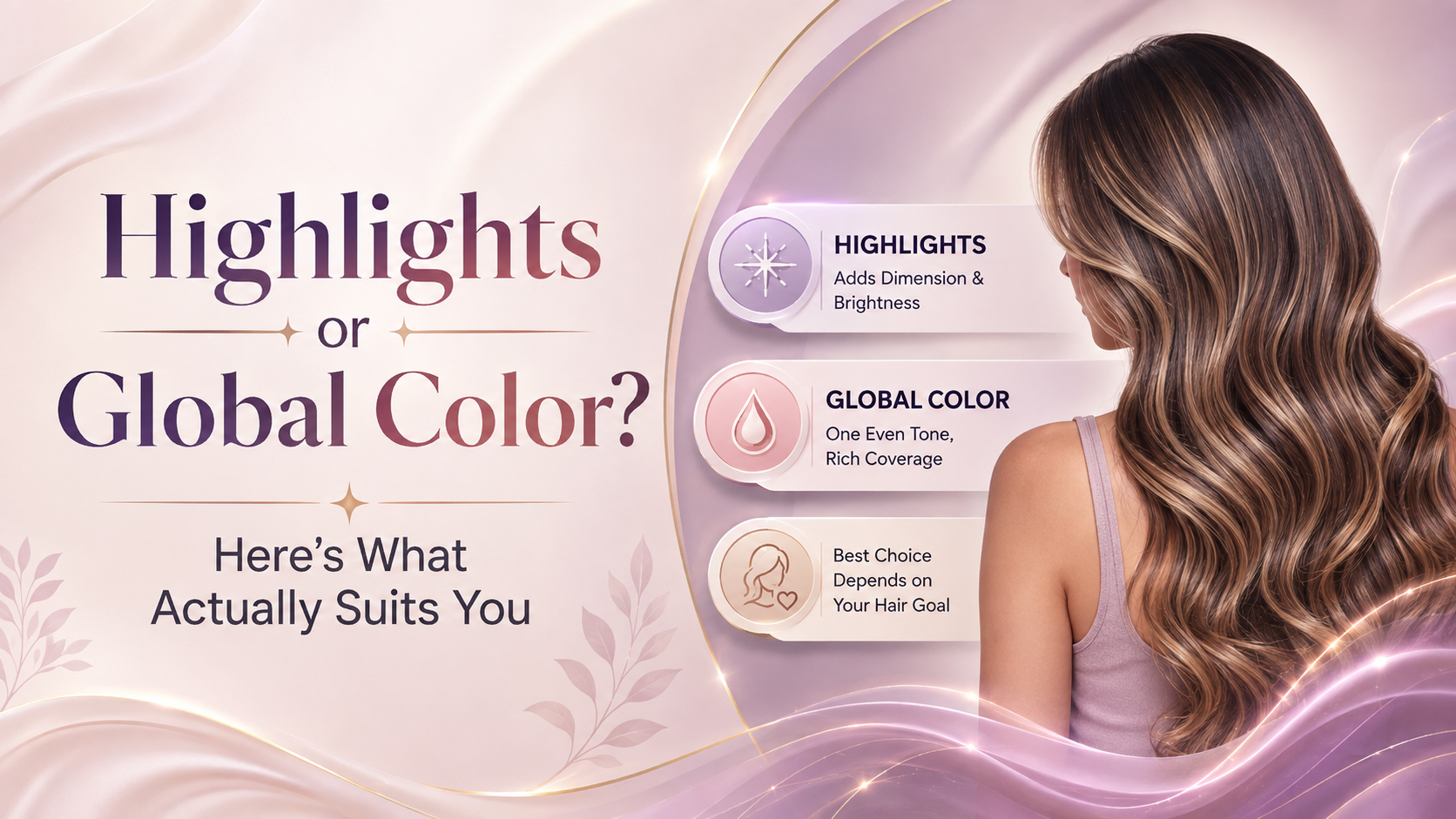
Changing your hair color sounds simple until you are sitting in the salon chair and the real question arrives: highlights or global color? Both can transform your look, but they create very different results. One can add movement, dimension, and brightness without changing every strand. The other can give you a complete, polished color shift from roots to ends.
The right choice is not about following a trend. It depends on your skin tone, natural hair color, lifestyle, maintenance comfort, hair condition, and the change you actually want. If you have been comparing hair highlights vs global color, this guide will help you decide what may suit you before your next professional hair color appointment at NSalon.
What Is Global Hair Color?
Global hair color means applying one main shade throughout the hair, usually from the roots to the ends. It is ideal when you want a noticeable overall change, want to cover greys, refresh faded color, or create a more uniform finish.
Someone with naturally dark hair may choose chocolate, mocha, burgundy, copper brown, or a softer brown tone for a complete transformation. Global color often looks sleek because the hair follows one dominant color story.
Global hair color is a strong choice for consistency, fuller grey coverage, or a more dramatic makeover. Root touch-ups may be needed depending on the contrast between your natural and chosen shade.
What Are Hair Highlights?
Hair highlights involve lightening or coloring selected sections instead of changing the entire head of hair. They can be subtle and natural or bold and high contrast, depending on the placement, width, and shade chosen by your stylist.
Popular options include face-framing pieces, caramel highlights, brown highlights, ash tones, soft golden pieces, and dimensional lowlights. Because part of your natural base remains visible, highlights can create depth and movement.
Highlights work well when you want a fresher look without committing to a complete color change. Well-blended placement can also grow out more softly than an all-over shade.
Highlights vs Global Color: The Real Difference
The biggest difference is the amount of hair being colored and the visual effect created. Global color gives you one overall shade, while highlights create contrast between lighter, darker, or differently toned sections.
Choose global color when you want a complete color transformation, stronger grey coverage, an even tone, or a polished single-shade finish. Choose highlights when you want dimension, brightness around the face, a softer change, or a style that preserves more of your natural base.
Neither option is automatically better. The most flattering result comes from matching the technique to your features and routine rather than choosing only from a reference picture.
What Actually Suits Your Skin Tone?
Your skin tone and undertone can make a major difference in how a hair color looks on you. A shade that looks beautiful on someone else may feel too warm, too cool, or too flat against your complexion.
Warm undertones often pair well with caramel, honey, golden brown, copper, and chestnut. Cool undertones may suit ash brown, cool beige, mocha, burgundy, or cooler highlights. Neutral undertones usually have more flexibility across both families.
A professional consultation makes choosing the best hair color for your skin tone easier because the stylist can adjust depth, warmth, and placement to complement your face.
Consider Your Natural Hair Color
Your starting shade affects both the result and the processing required. Very dark hair may need more lifting to reach a much lighter global shade, which can increase maintenance and may call for a gradual approach.
Highlights can be a practical first step for dark hair because they create visible change without lightening every strand. If you want to move only one or two shades from your natural color, global hair color can create a smooth result with less root contrast.
Think About Maintenance Before You Choose
Hair color should fit your lifestyle after you leave the salon. If you do not want frequent root appointments, softly blended highlights may be easier to maintain than a high-contrast global color. If grey coverage is your priority, however, global color may be more practical because it offers fuller coverage at the root area.
Highlights may still need toning or refreshing, while global color can require root retouches. In both cases, color-safe products, heat protection, and professional aftercare help maintain shine and tone.
What About Hair Condition?
Your hair’s current condition should be part of the decision. Previously bleached, chemically treated, very dry, or fragile hair may not be ready for aggressive lightening. A professional hair color consultation allows the stylist to assess porosity, previous color history, breakage, and realistic lift before selecting the technique.
The best result is not always the lightest possible result in one appointment. A gradual color plan can protect hair integrity while moving you toward your desired look.
Which Option Works Better for Different Goals?
If you want to brighten your face without changing everything, face-framing or dimensional highlights can work well. For visible greys and one rich shade, global color is usually more effective. Highlights can add movement to flat-looking hair, while a global refresh can make uneven or faded color look more uniform.
For a dramatic makeover, global color creates a stronger overall shift. A combination of global color and strategically placed highlights can deliver both richness and dimension.
Why a Professional Hair Color Consultation Matters
Reference photos are useful, but they do not show your hair history, natural base, undertone, density, or maintenance routine. A professional hair color salon consultation helps turn inspiration into a realistic plan.
At NSalon, the goal is not simply to copy a trending color, but to interpret it around your features and hair condition. The right color can sharpen a haircut, brighten the face, and make the overall style feel more intentional.
So, Highlights or Global Color?
Choose highlights if you want softness, dimension, natural-looking brightness, or a lower-commitment entry into hair color. Choose global color if you want a complete transformation, richer uniform color, or stronger grey coverage.
If you are still unsure, a consultation can narrow the choice. The most flattering hair color is the tone and placement that works with your complexion, natural hair, lifestyle, and maintenance preferences.
FAQs
1. Which is less damaging: highlights or global color?
It depends on the amount of lift and your current hair condition. Highlights affect selected sections, while global lightening may process more hair. A professional assessment is the safest way to choose.
2. Are highlights better for first-time hair color?
They can be. Soft highlights allow you to experiment with color while keeping much of your natural base visible, making the change feel less dramatic.
3. Is global hair color better for grey coverage?
Usually, yes. Global color is commonly chosen when the main goal is consistent grey coverage from the roots through the rest of the hair.
4. How often do highlights and global color need maintenance?
Timing varies by shade, contrast, growth, and technique. Global color may need more frequent root touch-ups, while blended highlights often grow out more softly but can still require toning.
5. Can I combine global color with highlights?
Yes. A stylist can use a global base shade and add selected highlights for depth, brightness, and a more dimensional finish.