
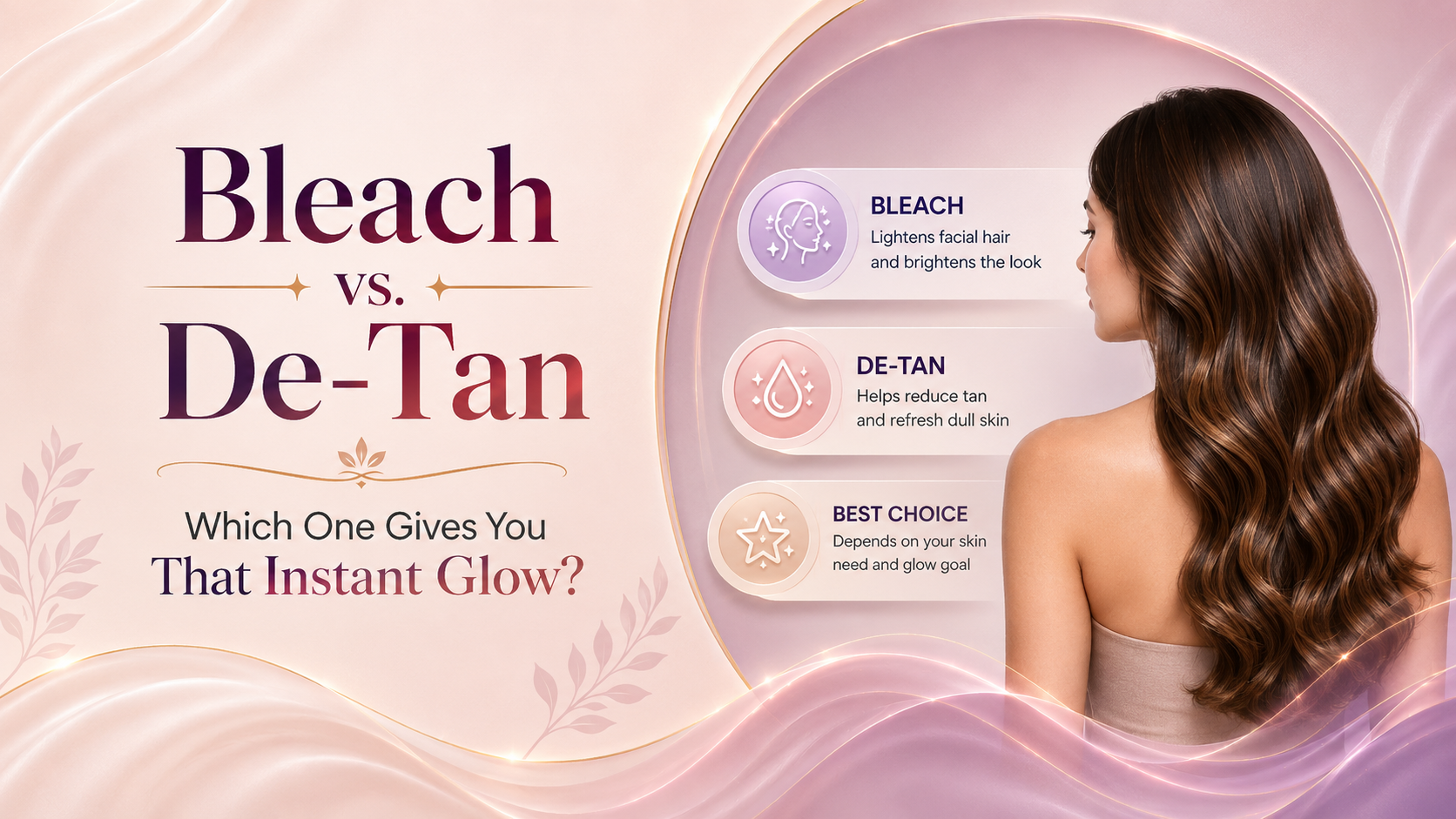
You have a dinner, wedding, date night, or important event coming up, but your skin looks dull. At the salon, two familiar options often come up: facial bleach and a de-tan treatment. Both can make the face look fresher and brighter, but they work differently. So, which one delivers the instant glow you want?
The answer depends on what is making your skin look dull. If visible facial hair creates a shadow, bleach may give a quicker cosmetic brightening effect. If sun exposure, tanning, roughness, or dead skin is the concern, a salon de-tan treatment may be better. Understanding the difference helps you choose a service that suits your skin.
What Does Facial Bleach Actually Do?
Facial bleach is primarily designed to lighten fine facial hair. Professional bleach formulas use oxidising ingredients that reduce visible hair pigment so it blends more closely with the skin tone. Because darker facial hair can cast a slight shadow, lightening it can make the complexion appear clearer and brighter almost immediately.
This is why face bleach is often chosen before parties and special occasions. The change can be noticeable after a single salon session, particularly for people with visible peach fuzz or darker facial hair.
However, bleach does not remove a suntan in the true sense. It may make the skin look brighter temporarily, but its main action is on facial hair rather than on melanin responsible for tanning. That distinction matters when deciding between bleach vs. de-tan.
What Is a De-Tan Treatment?
A de-tan treatment is intended to improve the look of sun-exposed, uneven, and dull skin. Depending on the formulation, a professional salon de-tan may combine cleansing, gentle exfoliation, brightening ingredients, masks, and soothing products to lift surface buildup and improve overall radiance.
A suntan develops because skin produces more melanin in response to ultraviolet exposure. No salon product can safely erase that response in minutes. A good tan removal treatment can reduce surface dullness, lift dead skin cells, improve texture, and help the complexion look more even as the tan gradually fades.
For clients who feel their skin looks tired after a holiday, outdoor travel, commuting, or prolonged sun exposure, de-tan is often more relevant than bleach.
Bleach vs. De-Tan: The Quick Comparison
| Factor | Facial Bleach | De-Tan Treatment |
| Primary purpose | Lightens visible facial hair | Reduces the look of tanning and surface dullness |
| Best for | Noticeable facial hair or shadow | Sun-exposed, uneven, rough, or dull-looking skin |
| Instant effect | Often gives quick visible brightness | Can give fresh, clean radiance after exfoliation and masking |
| Works mainly on | Hair pigment | Skin surface and dead-cell buildup |
| Typical choice before an event | Yes, especially for facial-hair visibility | Yes, especially for dull or sun-tanned skin |
| Key caution | Can irritate sensitive skin | Over-exfoliation can irritate sensitive skin |
So, Which One Gives a More Instant Glow?
For an immediate visual brightening effect, facial bleach can look more dramatic because it changes the appearance of dark facial hair in one sitting. The face may seem brighter because the hair creates less contrast against the skin.
But if your main problem is tanning, uneven texture, or a tired complexion, de-tan usually creates a more relevant type of glow. The skin can feel smoother and look cleaner and fresher because the treatment targets surface buildup rather than hair colour.
In simple terms: choose bleach when facial hair makes your complexion look darker; choose de-tan when sun exposure and dullness are the bigger concerns. If both are present, a salon professional can advise whether the services should be combined, spaced apart, or replaced with a gentler option.
Who Should Be Careful With Bleach or De-Tan?
Instant glow should never come at the cost of skin comfort. Bleach and de-tan products can both irritate skin when they are too strong, left on for too long, or used on an already compromised barrier.
Be cautious if your skin is very sensitive, sunburned, recently waxed or threaded, actively irritated, or recovering from strong exfoliating products or professional procedures. A patch test is particularly important before using a new bleach formula. If you are using prescription skincare or have a persistent skin concern, ask a dermatologist before choosing an intensive salon treatment.
Professional application matters because timing, product strength, skin preparation, and aftercare can significantly affect the experience.
How to Make Your Post-Salon Glow Last Longer
Whether you choose facial bleach or a de-tan treatment, aftercare affects how long your skin looks fresh. Keep the routine simple and avoid layering multiple active products immediately after the service.
Use a gentle cleanser, moisturise well, and apply broad-spectrum sunscreen every morning. Sun protection is especially important after a de-tan treatment because fresh, exfoliated skin may be more vulnerable to irritation and renewed tanning. Avoid harsh scrubs, strong acids, retinoids, or excessive rubbing until the skin feels completely comfortable again.
Regular sunscreen, hydration, and a consistent skincare routine do more for long-term brightness than last-minute treatments. Salon services work best as part of regular maintenance, not as a substitute for daily care.
What Should You Choose at NSalon?
The best salon treatment for glowing skin is the one that matches the actual reason your complexion looks dull. Before booking, look closely at what you want to improve. Is it visible facial hair? A recent tan? Uneven texture? Dryness? Or general tiredness?
At NSalon, a professional consultation can help you select between bleach, de-tan, or another skin-brightening treatment based on your immediate goal and skin comfort. Instead of chasing the strongest treatment, aim for the most suitable one. That is usually the fastest route to a glow that looks fresh, balanced, and natural.
FAQs: Bleach vs. De-Tan
1. Is de-tan better than bleach for removing tanning?
Yes. If tanning is your main concern, de-tan is more relevant because it targets surface dullness and unevenness. Bleach mainly lightens facial hair and does not remove melanin-based tanning.
2. Can I do bleach and de-tan on the same day?
It depends on the products and your skin condition. Combining services can increase irritation, so follow a professional salon recommendation rather than layering treatments automatically.
3. How long does the glow from facial bleach last?
The brighter appearance usually lasts until the lightened facial hair grows out or becomes more noticeable again. The exact duration varies from person to person.
4. Is de-tan suitable for sensitive skin?
Some de-tan treatments are gentle, but sensitive skin can still react to exfoliating or brightening ingredients. Tell your salon professional about sensitivity and avoid treatment on irritated or sunburned skin.
5. What is best before a special occasion: bleach or de-tan?
Choose according to the concern. Bleach helps when dark facial hair affects brightness, while de-tan is better for sun-exposed, rough, or dull-looking skin. Avoid trying a completely new treatment immediately before a major event.