
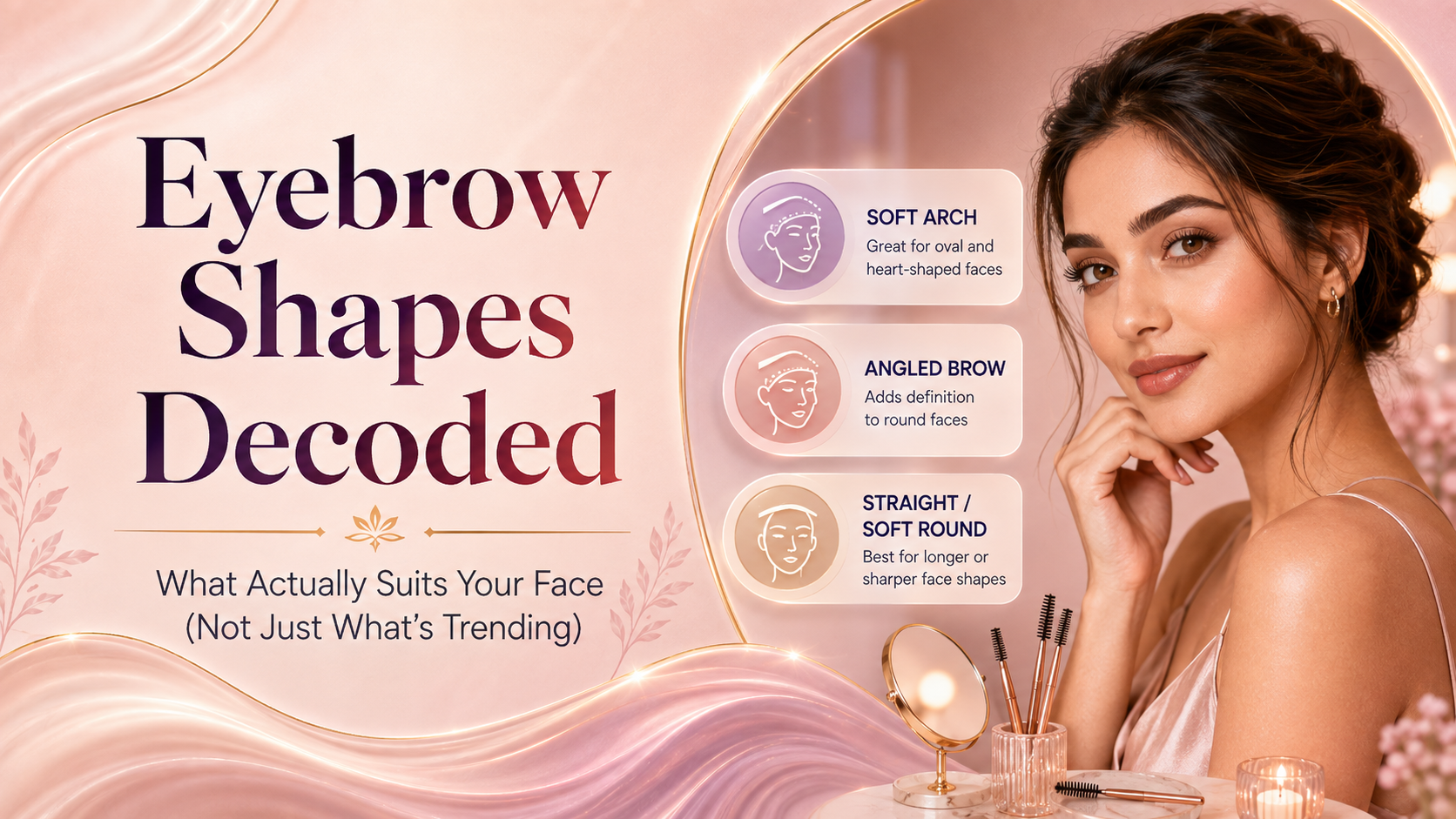
A well-shaped brow can change your entire face. It can lift the eyes, soften a strong jawline, add definition, or bring better balance to your features. Yet eyebrow trends often encourage everyone to copy the same look, whether it is fluffy brows, straight brows, a high arch, or ultra-thin brows.
The problem? A brow shape that looks stunning on one person may feel completely wrong on another.
The best eyebrow shape works with your natural brow growth, bone structure, face shape, and eye placement. If you have ever wondered which eyebrow shape suits your face, here is how to choose more intelligently.
Why Eyebrow Shape Matters More Than You Think
Eyebrows frame the upper half of your face. Changes in thickness, arch height, length, and tail direction can noticeably affect your features.
A very high arch can make a long face look even longer. A rounded brow may exaggerate the softness of a round face. A brow tail that drops too low can make the eyes look tired. Removing too much from the front can also make the brows appear too far apart.
Professional eyebrow shaping focuses on balance rather than forcing every client into one fashionable template.
Start With Your Natural Brow, Not a Trend
Before deciding on a shape, look at your natural eyebrow pattern. Where does the brow begin? Where does it naturally rise? How dense is the hair? Does the tail grow upward, straight, or downward?
Your natural structure gives important clues. Forcing straight brows into a dramatic arch, or naturally arched brows into a flat shape, can require excessive removal and constant maintenance.
In most cases, the most flattering brow is an enhanced version of your natural structure rather than a completely new shape.
Best Eyebrow Shapes for Different Face Shapes
Round Face: Add Soft Definition
A round face has softer angles and similar width and length. A softly angled brow with a natural arch can add structure and create a slightly elongated appearance.
Keep the arch gentle rather than sharp. Very rounded brows can repeat the circular shape, while completely flat brows may make the face appear wider.
If you are looking for the best eyebrow shape for a round face, think soft angles, moderate arch height, and a neat, slightly extended tail.
Oval Face: Preserve Natural Balance
Oval faces already have balanced proportions. A soft natural arch with medium thickness usually works beautifully.
Very high arches may make an oval face appear longer, while extremely straight brows can reduce natural dimension. The best approach is usually subtle refinement.
Square Face: Soften Strong Angles
Square faces often have a defined jawline. A curved or softly angled arch can help balance stronger features.
A little height adds lift, while a smooth curve adds softness. Fuller brows can also remain proportionate to a strong facial structure.
Heart-Shaped Face: Keep the Brow Gentle
Heart-shaped faces generally have a wider forehead and narrower chin. A soft, rounded or gently arched brow can create balance.
Keep the tail clean rather than extending it too far outward. Very dramatic peaks or extremely heavy brows may put too much emphasis on the forehead.
Long or Oblong Face: Create Horizontal Balance
A long face often benefits from straighter brows with a subtle arch, creating more horizontal balance.
The tail can extend gently outward instead of dropping sharply. Very high arches are usually less flattering because they add even more vertical length.
Diamond Face: Balance Prominent Cheekbones
Diamond faces are widest at the cheekbones. A rounded or softly angled brow can soften sharper facial lines.
Avoid extremely flat brows, which may visually emphasize the width of the cheekbones.
Face Shape Is Not the Only Factor
Face shape matters, but professional eyebrow shaping also considers eye spacing, brow bone, forehead height, and natural growth.
Removing too much from the inner brow can disrupt eye spacing, while keeping more fullness near the brow head may improve balance for wider-set eyes.
The arch should also follow your natural bone structure rather than being placed at an arbitrary point because a diagram says so. A skilled brow professional studies where the brow naturally begins, peaks, and ends before refining it.
Do Not Ignore Brow Thickness
The ideal eyebrow shape is not only about the arch. Thickness also changes how the brows interact with your features.
Fuller brows can balance stronger features, while finer brows may complement smaller features. Over-thinning, however, can remove natural structure.
Rather than following the latest thick-brow or thin-brow trend, choose a density that feels proportional to your face and realistic for your natural hair growth.
Why Professional Eyebrow Shaping Helps
DIY tweezing works for stray hairs, but repeated over-plucking can distort the natural brow line and make symmetry harder to restore.
A brow professional evaluates both brows together and may use threading, waxing, trimming, or tweezing based on your natural growth and desired finish.
At NSalon, eyebrow shaping should be about enhancing the individual rather than creating the same brows on every face. The right shape should complement your facial proportions, suit your personal style, and remain manageable between appointments.
The Best Brow Trend Is the One That Still Suits You Later
Fluffy, laminated, straight, thin, and dramatically arched brows will continue to move in and out of fashion. Your facial proportions are more consistent.
The most successful eyebrow shape enhances your natural structure, looks balanced without heavy makeup, and is easy to maintain.
Instead of asking, “Which brow shape is trending?” ask, “Which brow shape brings the best balance to my face?” That question is far more likely to lead to brows you actually love.
FAQs About Eyebrow Shapes
1. How do I know which eyebrow shape suits my face?
Start with your face shape, then consider natural growth, eye spacing, and bone structure. A professional consultation can help identify the most balanced shape.
2. Which eyebrow shape makes a round face look slimmer?
A softly angled brow with a moderate arch can add vertical definition. Avoid overly rounded or completely flat brows.
3. Are straight eyebrows suitable for everyone?
No. Straight brows often work well on long or oblong faces, but they may make round faces appear wider or require too much reshaping if your brows naturally arch.
4. How often should I get my eyebrows shaped professionally?
For many people, every three to five weeks works well, depending on hair growth and shaping method.
5. Is eyebrow threading better than waxing?
Both can create clean, defined brows. Threading allows precise hair removal, while waxing removes multiple hairs quickly. The better option depends on your skin sensitivity, hair type, and preference.
6. Should both eyebrows look exactly the same?
Not necessarily. Natural facial asymmetry means identical brows can sometimes look artificial. The goal is visual balance rather than perfect mathematical symmetry.