
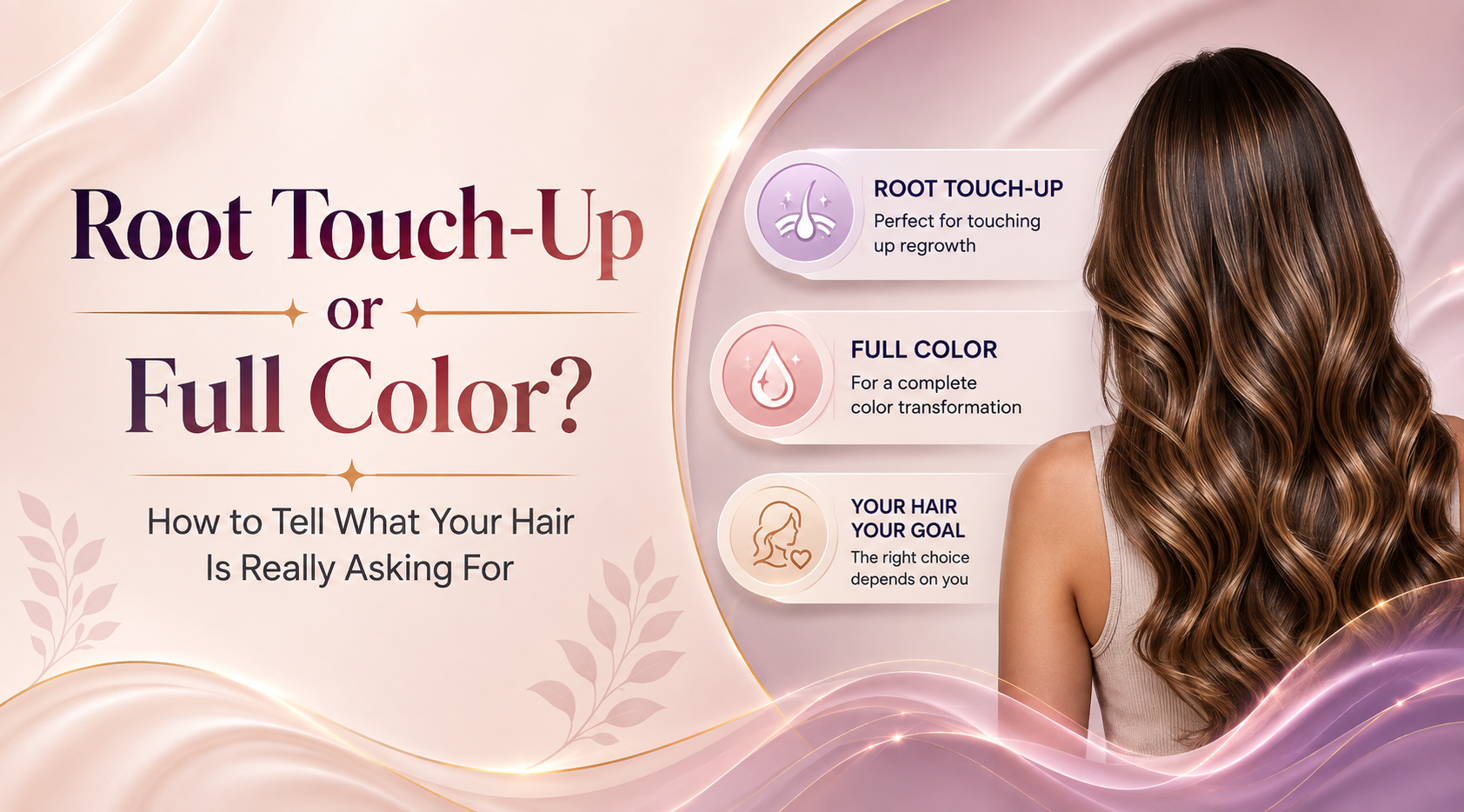
You look in the mirror and notice your color is no longer as fresh as it was a few weeks ago. Maybe your roots are showing, greys are becoming visible, or the lengths seem dull. The obvious thought is, “I need my hair colored again.” But the better question is: does your hair need a root touch-up, or is it time for full color?
Choosing the right service matters. Coloring more hair than necessary can stress already-treated lengths, while touching up only the roots may not solve fading, uneven tone, or a major color change. Understanding what your hair is asking for can help you maintain shine, consistency, and healthier-looking color between salon visits.
Root Touch-Up vs Full Hair Color: What Is the Difference?
A root touch-up is a targeted hair color service applied mainly to new growth near the scalp. It is commonly used for grey coverage, maintaining a permanent base color, or blending visible regrowth with previously colored hair.
Full hair color refreshes a larger portion of the hair, often from roots to ends. It may be used to deepen the shade, correct uneven color, revive faded lengths, or create an overall transformation.
The right option depends less on how long it has been since your last appointment and more on what has actually changed in your hair.
Signs You Probably Need a Root Touch-Up
A root touch-up is usually the better choice when:
- Your natural hair color is visible mainly at the roots.
- Grey hair is appearing around the hairline, parting, or crown.
- Your previous color still looks consistent through the lengths.
- You want to maintain your current shade rather than change it.
- Your roots have grown out, but the rest of the hair still looks balanced.
For people who use permanent color for grey coverage, root color maintenance can control visible regrowth without repeatedly applying permanent color to hair that has already been processed. This is especially useful if your ends are dry, porous, or prone to breakage.
Signs Your Hair May Need Full Color
Sometimes the roots are only part of the problem. A more complete hair color service may be appropriate when:
- Your hair looks noticeably faded.
- The mid-lengths and ends no longer match your roots.
- You want to go darker or shift to a different overall tone.
- Previous color has become patchy or uneven.
- Your brunette, red, copper, or fashion shade has noticeably lost richness.
- You are correcting an old color result.
Full color does not always mean applying strong permanent dye to every strand. A professional colorist may use permanent color at the roots and a gentler gloss, toner, or demi-permanent formula through the lengths. This can restore tone and shine without treating every section in the same way.
Why Coloring Roots to Ends Every Time Can Be a Mistake
Hair behaves differently along its length. New growth is relatively untouched, while the mid-lengths and ends may have been exposed to previous color, heat styling, sunlight, and environmental stress. Ends are often more porous, so repeated overlapping color can contribute to build-up, dullness, dryness, and loss of dimension.
Professional hair coloring is therefore not simply about choosing a shade. It is about choosing the right formula, placement, and processing method for each area of the hair.
What If Your Roots Are Fine but the Lengths Look Dull?
If the issue is faded tone rather than new growth, you may not need full permanent color. Your stylist might suggest a hair gloss or toner instead.
These services can revive shine, neutralize unwanted warmth, and improve faded color without changing your base shade.
How a Professional Colorist Decides What Your Hair Needs
A good color consultation looks at more than regrowth. Your colorist will assess how much natural hair is visible, how much grey is present, and whether the lengths are faded or uneven. They will also consider dryness, porosity, breakage, previous bleach or color, and any chemical treatments.
Your goal matters just as much. Maintaining a current shade requires a different plan from covering greys, correcting brassiness, going darker, or planning a complete transformation.
How Often Should You Book a Root Touch-Up?
Many people who cover greys or maintain a permanent base color book root touch-ups approximately every four to six weeks. Those with slower growth, softer grey blending, or lower contrast between natural and colored hair may be able to wait longer.
Full color usually does not need to be repeated at the same frequency. In many cases, the lengths only need occasional refreshing with a gloss, toner, or carefully selected color service.
How to Make Hair Color Last Longer
Use shampoo and conditioner designed for color-treated hair, avoid excessively hot water, and apply heat protection before styling. If your shade fades quickly, ask your stylist whether a color-safe mask, gloss service, or toning product is suitable.
Avoid experimenting with strong at-home color between professional appointments, especially if you may want to lighten or change your shade later.
Listen to the Hair, Not Just the Calendar
The best hair color schedule is not simply “every month.” Your roots, lengths, ends, and overall tone may need different things at different times.
If regrowth is the only concern, a root touch-up may be enough. If the entire color has faded, become uneven, or no longer reflects your desired shade, a broader refresh may make more sense. Sometimes the right answer is neither permanent root color nor full color, but a gloss, toner, or targeted correction.
A professional consultation at NSalon can help you choose a service that keeps your color looking polished while respecting the condition of your hair.
Frequently Asked Questions
1. Is a root touch-up less damaging than full color?
A root touch-up can reduce unnecessary processing because color is concentrated on new growth rather than repeatedly applied to previously colored lengths. The impact still depends on the formula, hair condition, and technique.
2. Can a root touch-up cover grey hair completely?
Yes. Permanent root color is commonly used for grey coverage. The formula and processing time may vary depending on the amount and resistance of grey hair.
3. Do I need full color if my ends are faded?
Not always. If the base shade is still correct, a gloss, toner, or demi-permanent refresh may be enough to restore tone and shine.
4. Can I get a root touch-up if I have highlights?
Yes, but it needs to be planned carefully so the base color works with the highlighted sections. Your stylist may recommend root color, a root melt, toner, or a combination.
5. How do I know which service to book if I am unsure?
Book a hair color consultation or explain your current color, regrowth, previous treatments, and desired result when scheduling. A professional colorist can recommend the most suitable option after assessing your hair.